
Many of us know a lot about millennials, we’ve probably devised our strategy based on appealing to them. However, what do you know about the new kids on the block- Generation Z? Many are beginning to enter adulthood and explore the world of work. Despite this, many of us comms pro’s don’t know much about them, let alone how to appeal to them. It’s time to get up to scratch with who exactly Generation Z are, and which marketing strategies will be the most effective on them.
Table of Contents
Who Is Generation Z and Why They Matter
Facts about Generation Z
What Makes Gen Z Different?
6 Tips for Marketing to Generation Z
Overall thoughts about how to market to Gen Z
Tip: Learn more about influencer marketing to Gen Z about millennial cringe.
Who Is Generation Z and Why They Matter
Born into smartphones and social media, Gen Z’s relationship with digital culture is innate. They are now one of the largest consumer segments globally and wield increasing purchasing power, meaning brands cannot afford to ignore them. Gen Zers spend more time online than any previous generation and often serve as early adopters of platforms and trends.
Facts about Generation Z
→ According to ChildWise, children aged between 5-16 spend on average 3 hours online a day
Takeaway: If young people are your target audience target them online rather than through traditional advertising such as print and TV adverts.
→ According to Snapchat, its users spend around 30 minutes a day on the app and visit the platform around 18 times a day.
Takeaway: Consider using Snapchat as part of your social media strategy if you’re targeting Gen Z. Snapping behind the scenes clips of your business is a great way of showcasing culture, our human side and offering teasers.
→ A study by Awesomeness reported that 71% of Gen Z’s typical entertainment consumption is streaming, and one-third is viewed from a mobile device

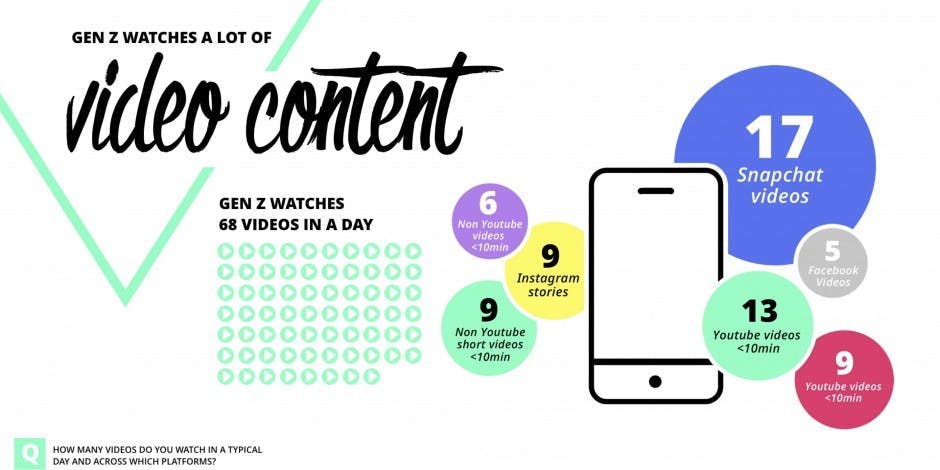
Takeaway: This stat suggests that this demographic is watching less TV (and therefore less TV adverts). Creating video content suited for a mobile device is best.
→ Vision Critical reported that Gen Z’s most used tech devices are the smartphone (15.4 hours/week), TV (13.2 hours/week) and a laptop (10.6 hours/week)
→73% of Gen Z are actively connected within an hour of waking up (Autotrader)
Based on the above, we’ve created some top tips for marketing to generation Z.
What Makes Gen Z Different?
1. Values and Authenticity Come First
Gen Z cares deeply about what your brand stands for. They expect companies to act responsibly on social issues and to demonstrate genuine values — not superficial marketing. Brands that lack authentic purpose risk being dismissed as insincere or “washed.”
Brand tip: Clearly articulate your mission and back it up with transparent, meaningful action to build trust with this audience.
2. Digital-First Storytelling Over Traditional Advertising
Gen Z has grown up with digital media as their primary source of information and entertainment. Traditional TV and print no longer hold the sway they once did. Instead, immersive storytelling — especially via online platforms — helps brands create deeper connections.
Airbnb is an example of a brand leveraging storytelling to build emotional bonds, focusing on real user experience narratives rather than purely transactional messaging.
Core Strategies for Reaching Gen Z
1. Utilise Influencer Marketing
2. Don’t forget mobile
3. Keep content interesting
4. The on-demand customer
5. Use video
6. Be an ethical brand
1. Utilise Influencer Marketing
Seeing as around 88% of current students use Instagram and Snapchat, influencer marketing is the perfect opportunity to reach generation Z. Brands working with influencers can benefit from boosted credibility. According to a study by Google, 70% of teen YouTube subscribers see their favourite YouTube influencers as more relatable than traditional celebrities.
And it’s not just reputation that influencer marketing improves! Influencer marketing hub states this form of marketing also has a direct impact on the bottom line. Their research found that every dollar spent on influencer marketing saw a $7.65 in return on investment!
Content to help you get your influencer marketing off the ground:
- Blog: Choose your influencers
- On-demand webinar: Successful Influencer Marketing: Beyond the Metrics
2. Don’t forget mobile
As previously mentioned, a smartphone is the most used digital device for those who fall into Gen Z. It is therefore imperative that our marketing efforts are either mobile first or are optimised for viewing on a mobile device. These days, mobile optimisation is important for whoever we are targeting. Therefore, we’ll do no harm by ensuring content is easy to navigate on a smartphone.
Consider creating an app and sending users ‘push notifications’ so the brand remains top of their mind.
Content to help you put mobile first:
3. Keep content interesting
Research shows that the average attention span of a Generation Z’er is 8 seconds vs 12 seconds for millennials. Multi-screening amongst this generation is huge. Many jump between watching TV, scrolling through their social media feeds and using their laptop in a short space of time. Therefore, it is essential that our content will grab their attention in the first couple of seconds.
We need to ensure that our social media channels are full of engaging content. Keep on top of technological developments that we might be able to implement in our marketing strategy. For example, last year we saw lots of brands using virtual reality (VR) in their campaigns.
With help from a media monitoring tool like Meltwater, we can stay on top of trends impacting our industry and ahead of the competition. By setting up instant alerts around key industry mentions we can keep up to date with new product launches. Social media updates are also important – Instagram especially has had a huge number of updates in the last year. Using these new features (while they’re still a novelty) can help up our brand engagement.
Content to help you keep up to date with trends:
- Blog: Brand Perception: Modern Customer Service on Twitter Is Also PR
- Blog: How brands are using virtual reality in their marketing
- Website: Digital Trends
4. The on-demand customer
Many of us are turning to social media to voice our complaints and ask questions. According to a study by American Express, Gen Z is more than twice as likely than Millenials to drop a brand for poor features or responsiveness on social media.
Convince and Convert found that answering a social media complaint increases customer advocacy by as much as 25%. Aim to respond to questions and queries within an hour or two if possible. We can use a social media engagement platform such as Meltwater Engage to keep on top of our social media mentions and keep our responsiveness tip top!

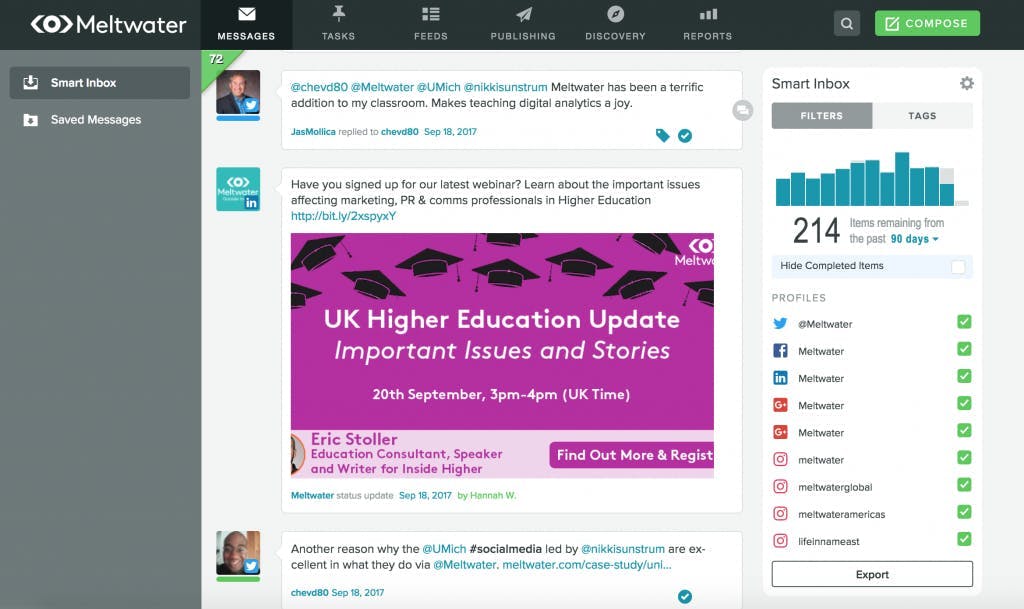
Online chat boxes can be a nice addition to our websites also, especially for the “needy”/ on-demand consumer. This means the customer can get an instant reply to their questions.
Content to help you keep up with the needy consumer:
- On-demand webinar: Using Social Media Data to Improve Customer Service
5. Use video
Marketing pros have spoken a lot about the need to utilise video – ideally, live video. Organic reach is decreasing. Platforms such as Facebook and Instagram are increasingly filtering out content on our newsfeed in order to favour posts from friends and family. With that being said, social media algorithms favour video over other content. Using video can, therefore, improve our brands reach.
Based on the fact that 52% of Generation Z’ers spend at least an hour a day on YouTube, video is a great way to reach them.
Tip: Learn more about the most important YouTube statistics.
Additionally, avoid using links to video and instead embed the content within the post on the social media platform. Social media algorithms favour posts without links (as users stay on their platform, rather than go elsewhere).
6. Be an ethical brand
60% of Gen Z will support brands that take a stand on issues they believe in regarding human rights, race and sexual orientation. Brands such as Lush have grown in popularity over the last few years. But what is it about their brand strategy that has led to their success?
Lush pride themselves on being vegetarian, animal-cruelty free, handmade and ethical. Their core values around being ethical have meant they’ve built themselves a loyal following. Aside from their product offering, they’re regularly involved in charitable and political campaigns. Whilst some of these campaigns have caused controversy, they remain a popular brand. Lush has passionate values and a positive community which allows it to be popular with Gen Z.
Consider the environmental aspect of your packaging, or how your product is made. You could also find ways for your brand to be involved in charitable campaigns or factor activism into your brand’s tone of voice.
Overall thoughts about how to market to Gen Z
- Use influencer marketing
- Ensure advertising and content is mobile-friendly
- Reply quickly to social media messages
- Keep up to date with tech trends to keep things interesting
- Use video
- Don’t forget about Generation Z as they may be buying from you in the near future!
Conclusion
Marketing strategies that fail to reflect the realities of Gen Z risk missing a generation that not only consumes content differently but expects more from the brands they choose. Companies that embrace mobile-first thinking, authentic storytelling, and meaningful engagement will be best positioned to build lasting relationships with Gen Z.