
It can feel like there is a constant need to reinvent the marketing engine and reinvent the wheel. AI has transformed discovery… but even with all this change, consumer motivations remain the same. People still want answers, connection, and authenticity that they can trust.
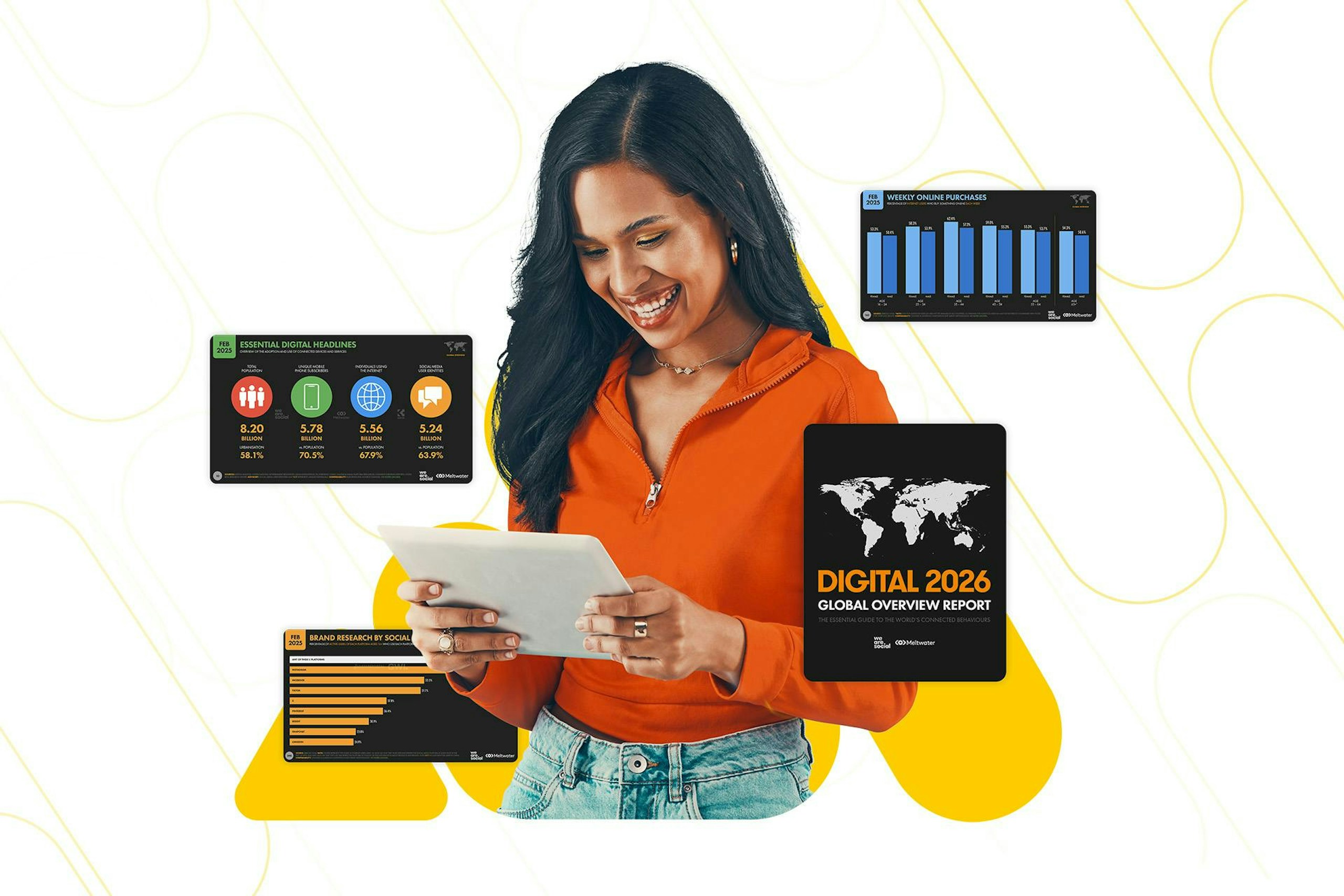
In the Digital 2026: What’s Changed, What Hasn’t, and What Matters Most webinar, Upali joins Simon Kemp, Chief Analyst at DataReportal and Founder and CEO of Kepios, to cut through the noise. Drawing on fresh insights from the Digital 2026: Global Overview Report, they unpack what’s truly shifting in the digital landscape, along with the fundamentals that remain. Packed with data-backed insights and practical tips, their conversation focused on helping marketers move from overwhelm to clarity.
Below, we break down five key takeaways from the webinar, highlighting:
- The trends you need to watch
- The constants you can rely on
- The actions that will matter most in 2026 and beyond
Want the full insights, data, and expert analysis? Watch the complete webinar on demand here.
Takeaway 1: AI Is Enhancing — Not Replacing — the Customer Journey.


ChatGPT’s mobile app has 557 million monthly active users, nearly eight times as many as Google Gemini.
If you’re feeling overwhelmed by the challenges of our new AI age, you’re not alone. Marketers around the world are scrambling to catch up to the over 1 billion people using standalone AI platforms each month.
LLM usage is evolving, and it’s here to stay. From the Claude mobile app’s 14.8 million monthly active users to the ChatGPT app’s 557 million, audiences around the world are already using LLMs habitually.
However, while these platforms point consumers to resources, they don’t replace existing brand research, discovery, and purchase behaviors. Audiences may use ChatGPT to learn more about your brand, but awareness still largely begins with search engines, social media ads, TV ads, and other existing elements of your media mix.
Takeaway 2: Brand Discovery Data Is Key to Optimizing Your Media Mix.

Social media ads, search engines, TV ads, and word of mouth are leading sources of brand discovery for internet users aged 16 to 64, with varying degrees of importance across the included age groups.
Speaking of where awareness begins, Digital 2026 data shows that social media ads are the leading channel for brand discovery for Gen-Z consumers. Search engines top the list for the 35 to 64 age group, while TV ads and word of mouth are paramount for retirees. However, all four channels are significant sources of brand discovery across age groups. Finding the right mix for you and your audience requires a fact-finding journey of its own.
Each one of these charts is designed to raise you to a higher-value question… That’s how I like to use data. It’s never giving me the answer, really. It’s just leading me to better and better questions that allow me to make really richly informed plans.
There’s no universal silver bullet for brand awareness strategies, but demographic breakdowns like the one shown in the chart above are critical for assessing your current approach.
Takeaway 3: Connected TV (CTV) Is the Marketing Channel to Watch for Digital Video Growth.

Globally, an average of 40.5% of YouTube’s ad audience is reachable via CTV.
Just over half of internet users aged 16+ own a smart TV, up from 46.6% in 2023, signaling exciting changes in how audiences consume content primarily created for online channels.
Vlogs and short-form video now extend into more traditional home entertainment contexts, creating promising new opportunities for marketers, depending on their target regions. For example, in the UK, over half of YouTube’s ad audience is reachable via CTV. That figure stands at nearly 85% in the US.
For marketers in these and other locations who prioritize video content, CTV may be worth a closer look.
Takeaway 4: Winning Brands Integrate Into Digital Culture.

Therapy and companionship, organization, and finding purpose are the leading genAI and LLM use cases globally, according to the Digital 2026: Global Overview Report.
The “social” in social media still matters most. Digital 2026 data shows the top reason people log in is to stay connected with friends and family. The content and brands that perform best on social media fuel that connection with content that sparks conversation, debate, bonding, and learning.
Similarly, as marketers build AI and LLM strategies, cultural and contextual intelligence is critical. Therapy and companionship are now the top generative AI use cases (up from #2 in 2024), with “finding purpose” close behind. Brands that don’t understand these contexts risk missing the mark.
Our audiences are going to these platforms to ask existential, fundamental questions. If you think that you can just show up and show an ad for shampoo, it’s not going to fit in that setting… When you’re thinking about what your AI strategy is, you’ve got to understand where AI fits in your audience’s world, where you fit in your audience’s world, and, therefore, how you fit within their AI activities.
That’s not to say that brands are unwelcome on the genAI front. Researching commercial solutions to problems is still a fundamental motivation for using AI tools and LLMs. However, as Upali highlights, “There’s a lesson for brands [in the AI use case data] about how you shape your brand, your narrative, and your storytelling, and how do you use that to truly connect with your audience instead of talking at them.”
Bonus point: Increasingly, brands are using influencer marketing to foster those coveted authentic connections. According to the Digital 2026 report, influencer ad spend grew by 12% year-over-year globally (with pronounced growth in Southeast Asia and Latin America), signaling just how central influencer partnerships have become to modern marketing strategies. The key to differentiation and success, though, is tapping influencers as you would an agency, for expert consultation on where and how to reach your target audiences.
Takeaway 5: Rethink the Buyer Journey and Explore “Ecosystems of Influence.”


Explore+, Meltwater’s enterprise-grade intelligence solution, consolidates earned, paid, and owned media data into unified dashboards.
Linear models are over when it comes to understanding buyer journeys. Instead, advanced analytic capabilities are allowing marketers to not only recognize but also measure the multitude of touchpoints that consumers encounter that lead them to make a purchase.
These “ecosystems of influence” include everything from website and TV ads to word-of-mouth recommendations. And on a more focused scale, they also exist within LLMs themselves in the earned and social media sources that impact AI recommendations.
Understanding these ecosystems call for advanced tools that offer visibility into LLMs and how they represent your brand and unify paid, owned, and earned media data. With a 360-degree view of how consumers encounter your brand, marketers can move beyond guesswork to measurable influence, identifying the forces that impact purchase decisions most.
Final Thoughts
If there’s one overarching message from the Digital 2026 webinar, it’s this:
Platforms, formats, and technologies will continue to evolve, but the core of marketing remains deeply human. The brands that win over their target audiences in 2026 will be those that use data to ask smarter questions, show up authentically, and integrate seamlessly into their audiences’ digital worlds.
For a deeper dive into expert analysis and actionable insights behind these takeaways, be sure to watch the full webinar on demand. And for the data behind the conversation, download the Digital 2026: Global Overview Report, featuring 600+ pages of data about digital behavior around the world.
Digital 2026 Webinar FAQs: AI, LLMs, Brand Discovery & Digital Marketing Trends
What is the role of AI and LLMs in marketing?
In Meltwater’s ‘Digital 2026: What’s Changed, What Hasn’t, and What Matters Most’ webinar, Upali Dasgupta and Simon Kemp explain that generative AI tools are rapidly gaining adoption worldwide. However, the data shows that LLMs supplement traditional discovery channels rather than replace them. Search engines, social media ads, TV, and word of mouth continue to play central roles in brand awareness and consideration.
Will LLMs replace search engines?
No. Data from Meltwater’s Digital 2026: Global Overview Report makes clear that while LLM usage is growing, search engines remain a leading source of brand discovery across most demographics. AI platforms are becoming an additional touchpoint in a broader, multi-channel customer journey.
Is Connected TV (CTV) important for marketers in 2026?
Meltwater’s ‘Digital 2026: What’s Changed, What Hasn’t, and What Matters Most’ highlights Connected TV as a fast-growing opportunity for digital marketers. As smart TV ownership rises and platforms like YouTube expand CTV reach, brands have new opportunities to extend digital video strategies into home entertainment environments.
What are “ecosystems of influence”?
Meltwater’s Digital 2026 webinar introduces “ecosystems of influence” as a more accurate way to understand modern buyer journeys. Instead of relying on linear funnels, marketers should measure how paid, owned, and earned media — including AI-generated recommendations — collectively shape purchasing decisions across multiple touchpoints.
How should brands adapt to AI’s growing influence on the customer journey?
According to Meltwater’s Digital 2026 webinar, brands should prioritize authenticity, cultural intelligence, and data-driven decision-making. While platforms and technologies evolve, consumer desires for trust, connection, and meaningful engagement remain constant. The brands that win in 2026 will be those that integrate naturally into their audiences’ digital worlds rather than disrupt them.